AI Character Creator Games: From Slider Menus to Text Prompts
AI character creator games are starting to change one of the oldest rituals in gaming: making your character. For decades, “create your own character” meant assembling one from parts a designer made years earlier. Prompt-based creation flips that. You describe the character you imagine, in plain words, and the game draws it for you.
This post looks at how character creation got here, what text prompts actually change, and how we built prompt-based creation into Inklets as a core game feature rather than an art tool on the side.
A short history of “create your own character”
Character creation has gone through three broad eras.
Presets. Early games offered a roster: pick the knight, the wizard, or the rogue. Identity meant choosing, not making.
Sliders and parts. From MMOs to The Sims to modern RPGs, creation became assembly. Face shape sliders, hair catalogs, outfit pieces. At its best this is wonderfully expressive. It is also slow, front-loaded before you have played a minute, and bounded: you can only make what the parts allow. Every “unique” character is a remix of the same kit.
Catalog skins. Mobile and live-service games mostly skipped deep creation and sold identity instead. Your character is whichever skin you bought. Expression became a transaction.
Each era expanded who you could be, but all three share a ceiling: someone else drew the options first.
What text prompts change
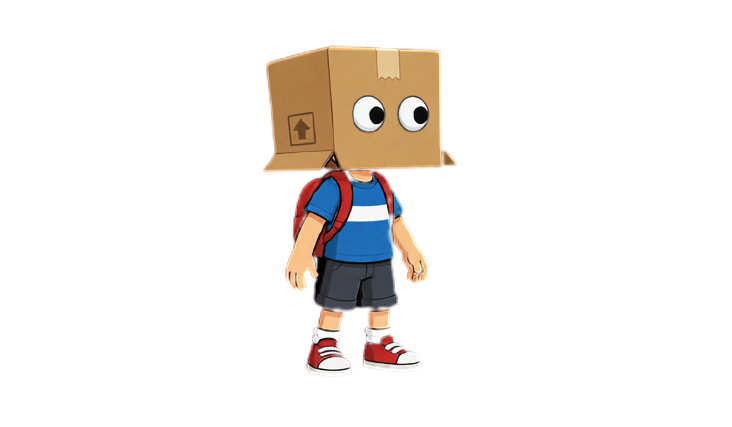
An AI character creator removes the parts bin. You write something like “a cardboard box kid with a blue shirt, red backpack, and curious eyes,” and the system generates the character from the description.
Three things genuinely change:
- The space of characters is open. You are not limited to combinations a designer anticipated. Players reliably come up with ideas no parts catalog would include: object mascots, mood-based creatures, inside jokes.
- Creation takes seconds, not an evening. A sentence is faster than forty sliders. That matters on mobile, where sessions are short and front-loaded menus kill momentum.
- The character carries intent. A described character means something to the person who described it. That attachment is the entire point of customization, and prompts get there faster than sliders ever did.
The honest caveat: you trade precision for openness. A slider gives you exact control over a jawline; a prompt gives you interpretation. Good prompt-based games lean into that by keeping a strong, consistent art style, so every generated character still looks like it belongs in the world.
How Inklets does it
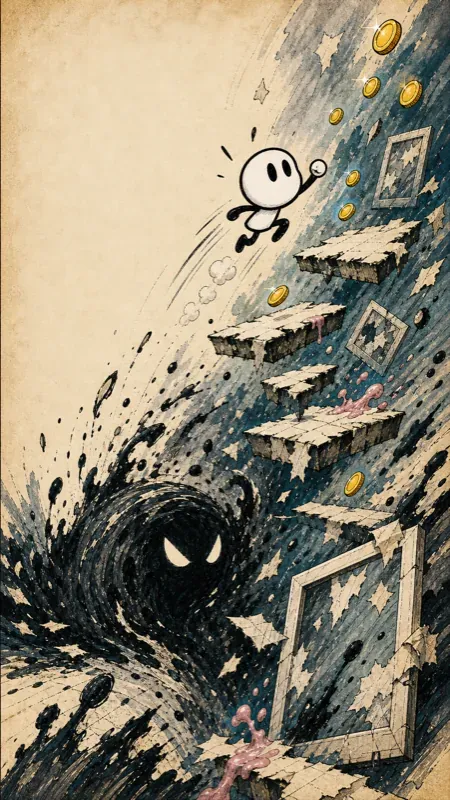
Inklets is a three-player climbing game that looks like a living sketchbook, and the AI Inklet Generator is built directly into the game flow. Here is how it works in practice:
- Describe your Inklet. Prompts are short on purpose, around 80 characters. The in-game hint says it well: keep it short, give it a feeling.
- The game draws it. Your description becomes a small climber that matches the sketchbook style of the rest of the game.
- Equip it and race. The new Inklet goes straight into your loadout, and you take it into a three-player match. Other players see your creation climbing next to theirs.
That last step is what we think matters most. A generated character you only look at is a picture. A generated character you survive a match with, lose with, and win with becomes yours. Created Inklets live in your Sketchbook alongside skins and other collected rewards, so the things you make accumulate into a collection over time.
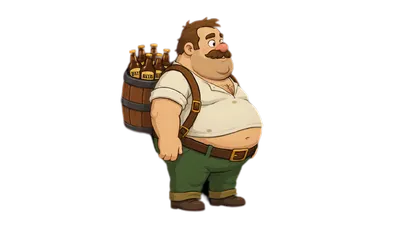
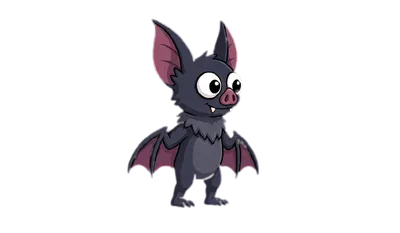
Because the game is multiplayer, creation also becomes social. Lobbies fill with characters nobody at the studio drew: voidlings, barrel couriers, sleepy paper bats, and whatever the other two players dreamed up. We wrote about why recognizable characters matter in competitive climbs in our post on Doodle Jump multiplayer.
What makes a good character prompt
From our playtesting, the prompts that produce the best Inklets share a pattern:
- One subject. “A box kid” beats “a box kid riding a dragon holding a sword.”
- One or two visual anchors. A blue shirt, a red backpack. Concrete details give the generator something to honor.
- A feeling. “Curious eyes,” “sleepy,” “grumpy.” Mood reads more strongly in a small inky character than any accessory.
Short, concrete, emotional. The 80-character limit is not a technical constraint so much as a design nudge toward exactly that.
Where this is going
AI character creator games are young, and most current uses of AI art sit outside the game: avatar generators, portrait tools, concept art assistants. The next step is generation that lives inside play, where what you create is something you immediately use, risk, and keep.
That is the bet Inklets makes. If you want to see the game the generator lives in, our first look at Inklets covers the climbing, the rising ink, and the Sketchbook. The game is planned for iOS and Android in Summer 2026, and the waitlist is open at inklets.app.
Related reads.
 inklets
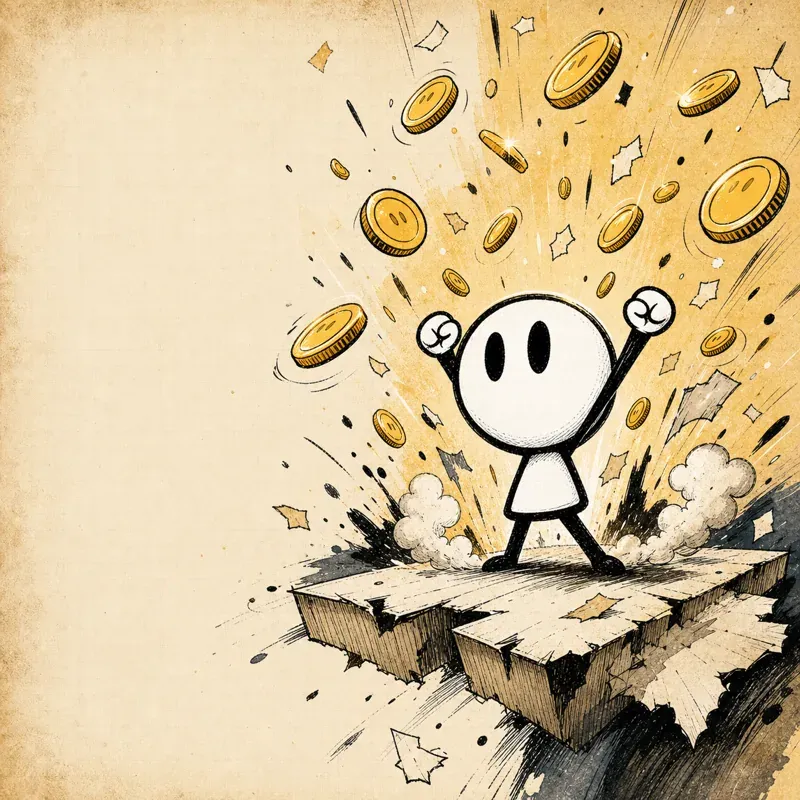
 What Is Inklets? A First Look at the Three-Player Sketchbook Climber
Inklets is a sketchbook-style multiplayer climber for iOS and Android, planned for Summer 2026. How matches work, the AI Generator, and the Sketchbook.
 doodle jump multiplayer
 Doodle Jump Multiplayer: What Exists, What Doesn't, and What's Next
Can you play Doodle Jump multiplayer with friends? Here is what Lima Sky shipped, why racing isn't the whole answer, and what a survival climber adds.